What to visit in the LangheThe Langhe: a land of villages, wineries and centuries-old castles!
Le Langhe (“hills” in Piedmontese) are located between the provinces of Asti and Cuneo and bordering the areas of Roero and Monferrato
If you are looking for some picturesque areas to visit in autumn, the Langhe is the area for you. As a testament to its value, the Langa territories have been inscribed as a UNESCO World Heritage Site.
Why visit the Langhe?
The Langhe-so called because there is more than one, the Bassa and Alta Langa-is an area of lower Piedmont, lying between the Ligurian Apennines, the Maritime Alps and Monferrato.
The charming hills-whose profile varies depending on whether one is on the right or left bank of the Tanaro River-are gentle and soft to the eye, almost like waves covered with vegetation.
The hills of the Langhe are a succession of gently undulating contours, bewitching vineyards, architectural curiosities, and traditionally colored villages nestled among hillsides filled with red vineyards.
The Langhe is populated by numerous traditional villages, enriched by medieval towers and manors, historic palaces and noble fortresses.
This land is famous for tasty food and traditional red wines-a nice lunch in a Langhe winery with a great Barolo in hand is a must try. The wineries are very cozy!
What to visit in the Langhe
The Langhe is a favorite tourist destination for truffle enthusiasts, especially in autumn. Lovers of the delicious mushroom can engage in real explorations with truffle experts and truffle dogs along the Langhe and Roero in search of the prized fruits of the earth. As well as places to enjoy sips of velvety nectar, wineries are also tourist attractions, and can also be used as wedding venues.
Alba is a city that dates back to 6,000 before Christ, the relics of which are attractions of the “Eusebio” Civic Museum in Alba.
Alba is famous for its characteristic towers and treasures of sacred art that will not leave fans unsatisfied. The church of St. Dominic is a fine Romanesque-Gothic building. The Church of the Magdalene is another rewarding sight, due to its marble and fine Baroque forms.
Alba also hosts the Truffle Fair, a must for fans of the tasty local product. The Truffle Fair lasts from October to the end of November and contemplates many irresistible events.
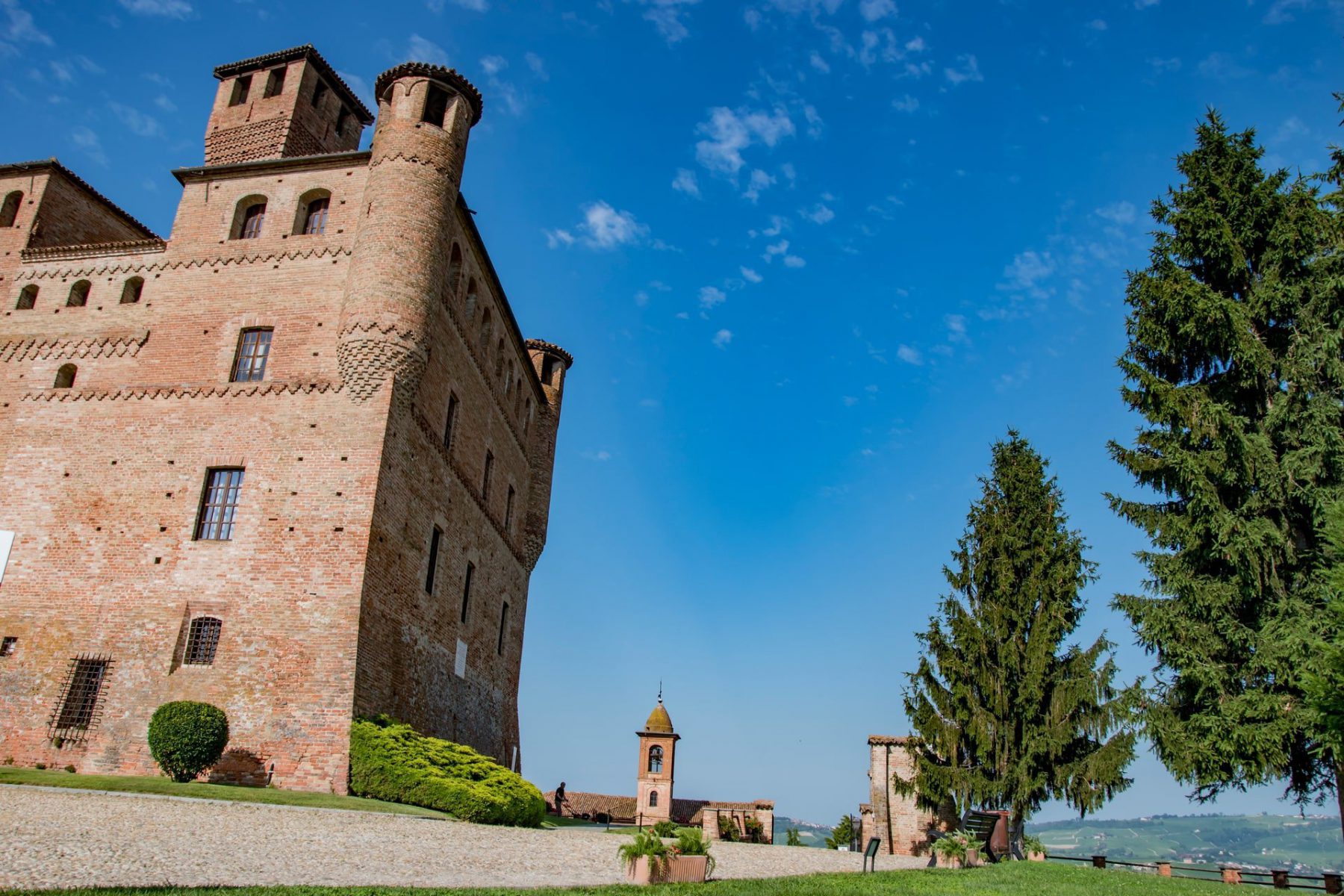
The castle of Grinzane Cavour at thetop of the hill: several paths branch off from it, leading through the surrounding rows of vines. Inside we find the Langhe Museum, full of artifacts and evidence of the presence of the Cavour account, as well as a fine wine shop and a starred restaurant.
Barolo and its castle, with WiMu Wine Museum inside, is another must-visit.
Barolo’s wine museum is somewhat of a symbol of the area’s wine cultivation: from its prime location among the vineyard-combed hillsides, it represents the sum total of these traditional crops. It is a real journey of discovery of traditions of the Piedmont region. Visits at the facility reach the castle’s basement, in which aging cellars were once located, immerse us in the tradition of local wine production.
The castle has five floors occupying 2,7000 square meters between them. On the main floor, the creation of Barolo wine is reenacted. On the third floor there are elements aimed at marveling at the particularities of Barolo wine. The second and second floors explore the importance of wine in the arts: music, theater, film, and of course cooking!
In the cellars of the Falletti Castle in Barolo, the final destination of the trip, Marquise Julia Colbert “invented” Barolo wine, which later became the official wine of the Savoy Court.
François Confino’s arrangements are evocative and will convey the sensations of a real cinematic experience!
Are you interested in art? The Barolo Chapel in La Morra is a work of contemporary art created by Sol LeWitt and David Tremlett from the restoration of a ruined building.
La Morra is an elevated village known for the production of Barolo and Nebbiolo, as evidenced by the many rows of vines and wineries in the surrounding area. The graceful panorama can be admired from the large terrace of the commune.
Between La Morra and Grinzane Cavour we find a real giant bench, a nice artistic installation that gives awe to those who decide to stand on it.
If you happen to be in Monforte D’Alba, be sure to visit the natural amphitheater the Horszowski Auditorium, an ideal place to hold concerts and civil rites under the open sky thanks to its perfect acoustics. At the top is the bell tower, only remnant of the ancient medieval church that ended up destroyed.
It is one of the most beautiful villages in Italy characterized by the steep streets leading to the square, and for the rewarding view of the surrounding vineyards.
The 19th-century neo-Gothic Monforte Church is definitely interesting, with its beautiful bell tower and wide steps.
Also worth admiring are the Oratory of St. Elizabeth and the Church of the Disciplined.
Want to admire the bewitching view from a truly sui generis stand?
Beautiful giant benches (Big Bench), made by American designer Chris Bangle together with some friends, are distributed in the Langhe Monferrate and Roero. The idea was to allow tourists to admire the landscape with children’s eyes, to fully immerse themselves in that dreamlike atmosphere. The benches are located in some suggestive locations, usually in less-traveled spots, so that tourists can try their hand at finding the unusual sights. Visitors to the Langhe then can engage in these fun treasure hunts to track down the picturesque installations.
Langhe benches are scattered among the various territories: Cigliè (one), Alba (one), Canale (one), Neive (one), Coazzolo (one), Slavesana (three), Monforte d’Alba (two), and Carrù (more than one).
There are about 67 giant benches in Piedmont, and the idea has also won over other regions such as Tuscany, Veneto, Emilia Romagna, and Lombardy.
If you decide to visit La Morra you will not miss this beautiful opportunity. A beautiful red bench overlooking traditional vineyards awaits you right in the Langhe.
All the more incentive to visit us, don’t you think?Subscribe to Tour in Vespa NewsRetain updated on the launch of new tours and exclusive promotions: you will receive valuable tips to experience TourinVespa at its best!Subscribe to Tour in Vespa NewsRetain updated on the launch of new tours and exclusive promotions: you will receive valuable tips to experience TourinVespa at its best!